
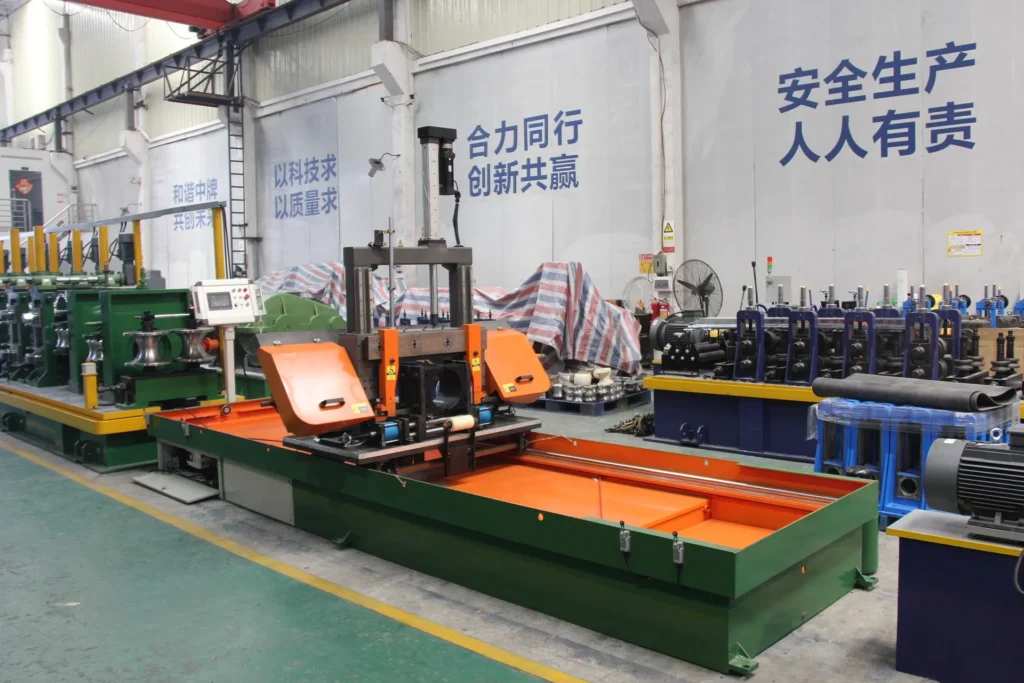
In the process of producing steel pipes by pipe making machine, pipe cutting machine is an indispensable equipment in the steel pipe production line. The function of pipe cutting machine is to accurately cut the steel pipe in the process of pipe making to ensure the accurate size and excellent quality of the finished product. Therefore, choosing a suitable pipe cutting machine can not only improve production efficiency, but also have a direct impact on product performance. Next, the working principle of pipe cutting machine will be explained, the differences between metal circular saw pipe cutting machine, grinding wheel pipe cutting machine and laser pipe cutting machine will be compared, and its automation function will be discussed, as well as the important link of pipe cutting machine in pipe making machine production.
Working Principles of Cutting Machines
The main function of a cutting machine is to cut long steel pipes to the required lengths with precision. The working principles of cutting machines in pipe production lines typically include the following steps:
- Feeding: The pipes to be cut are fed into the cutting machine working area via a conveyor belt, ensuring that the feeding process is stable and reliable.
- Measuring: Prior to cutting, the system automatically measures the length of the pipe and adjusts the cutting parameters according to preset values to achieve precise cuts.
- Cutting: Depending on the selected method, the cutting machine will efficiently and accurately cut the pipe, ensuring that the cut ends are smooth and suitable for subsequent processing.
- Discharging: After cutting is complete, the finished pipes are automatically conveyed to the next process, reducing human intervention and improving production efficiency.
Differences Between Metal Saw Cutting Machines, Abrasive Wheel Cutting Machines, and Laser Cutting Machines
Cutting machines can be categorized into three main types: metal saw cutting machines, abrasive wheel cutting machines, and laser cutting machines. They differ significantly in working principle, cutting effectiveness, and application ranges.
1. Metal Saw Cutting Machines
- Working Method: Metal saw cutting machines use high-speed rotating metal saw blades to cut pipes. The design of the saw blades allows them to easily penetrate a variety of metal materials, providing efficient cutting performance.
- Advantages and Disadvantages: This cutting method is fast and produces smooth cuts, reducing the need for additional processing. Since less heat is generated during cutting, the cut ends do not experience significant deformation. However, maintaining and replacing saw blades can be demanding, and frequent blade changes may be required over time.
2. Abrasive Wheel Cutting Machines
- Working Method: Abrasive wheel cutting machines utilize high-speed rotating abrasive wheels to cut pipes, achieving metal removal through the friction of the abrasive particles.
- Advantages and Disadvantages: This cutting method boasts strong versatility and is suitable for various pipe materials, generating less cutting heat and minimizing the potential for deformation. However, abrasive cutting might be slower, and the cuts may not be as smooth as those produced by metal saw cutting machines, often requiring additional processing.
3. Laser Cutting Machines
- Working Method: Laser cutting machines use high-energy laser beams to cut pipes. The concentrated energy of the laser beam allows for effortless cutting of metal materials.
- Advantages and Disadvantages: Laser cutting machines are known for their high cutting precision and speed, making them ideal for complex shapes and high-demand cutting tasks. With a minimal heat-affected zone during the cutting process, most cuts require little to no additional processing. However, the initial investment cost for laser cutting machines is often higher, and their cutting effectiveness may be limited for certain thicknesses of materials.
The Important Role of Cutting Machines in Pipe Production
The position of cutting machines in the pipe production process is crucial, as their precise cuts significantly enhance the overall efficiency of the production line:
- Connecting Other Processes: Cutting machines are typically located at the early stages of the production line, with the finished pipes serving as the basis for subsequent processing (such as welding and forming), ensuring the accuracy of follow-up operations.
- Improving Production Efficiency: By performing efficient cuts, cutting machines reduce material waste, lower production costs, and accelerate production cycles.
- Ensuring Compliance with Specifications: The precise cutting performed by cutting machines ensures that each pipe meets the specified length and quality requirements, thereby guaranteeing the quality of the finished products.
Manifestation of Automation Features
Modern cutting machines excel in their automation features, greatly enhancing production efficiency and management capabilities. These features are primarily reflected in the following aspects:
- Intelligent Control Systems: Many cutting machines are equipped with advanced numerical control systems that allow for automatic measurement and adjustment of cutting parameters, improving production flexibility.
- Automatic Feeding Systems: With automatic feeding devices, the feeding of pipes becomes more stable, reducing human intervention and enhancing safety.
- Quality Inspection: Some cutting machines are equipped with online inspection capabilities, enabling real-time monitoring of cutting quality to ensure the compliance of finished products.
- Data Management: Cutting data is recorded and managed in real time, providing necessary support for subsequent production analysis.
Cutting machines hold a vital position in pipe production lines, with metal saw cutting machines, abrasive wheel cutting machines, and laser cutting machines each having their respective advantages and disadvantages. Selecting the right cutting machine according to specific production requirements is crucial. The precision cutting, safe operation, and efficient production offered by cutting machines are essential components of modern steel pipe manufacturing. As technology continues to advance, the automation features of cutting machines will further enhance efficiency, driving steel pipe production towards a more effective, safe, and intelligent future. By choosing the appropriate cutting machine, manufacturers can significantly improve production efficiency while ensuring product quality, thereby gaining a competitive edge in the market.